Avocado is one of my favorite foods to introduce when babies start solids. It’s naturally soft, creamy, easy to prepare, and incredibly versatile.
You can turn a ripe avocado into a smooth baby puree in seconds, mash it with other first foods, or serve it as a soft finger food for babies learning to self-feed.
And perhaps the best part? There’s no cooking required!
If you have a ripe avocado sitting on your kitchen counter, you already have the base for several simple baby meals.
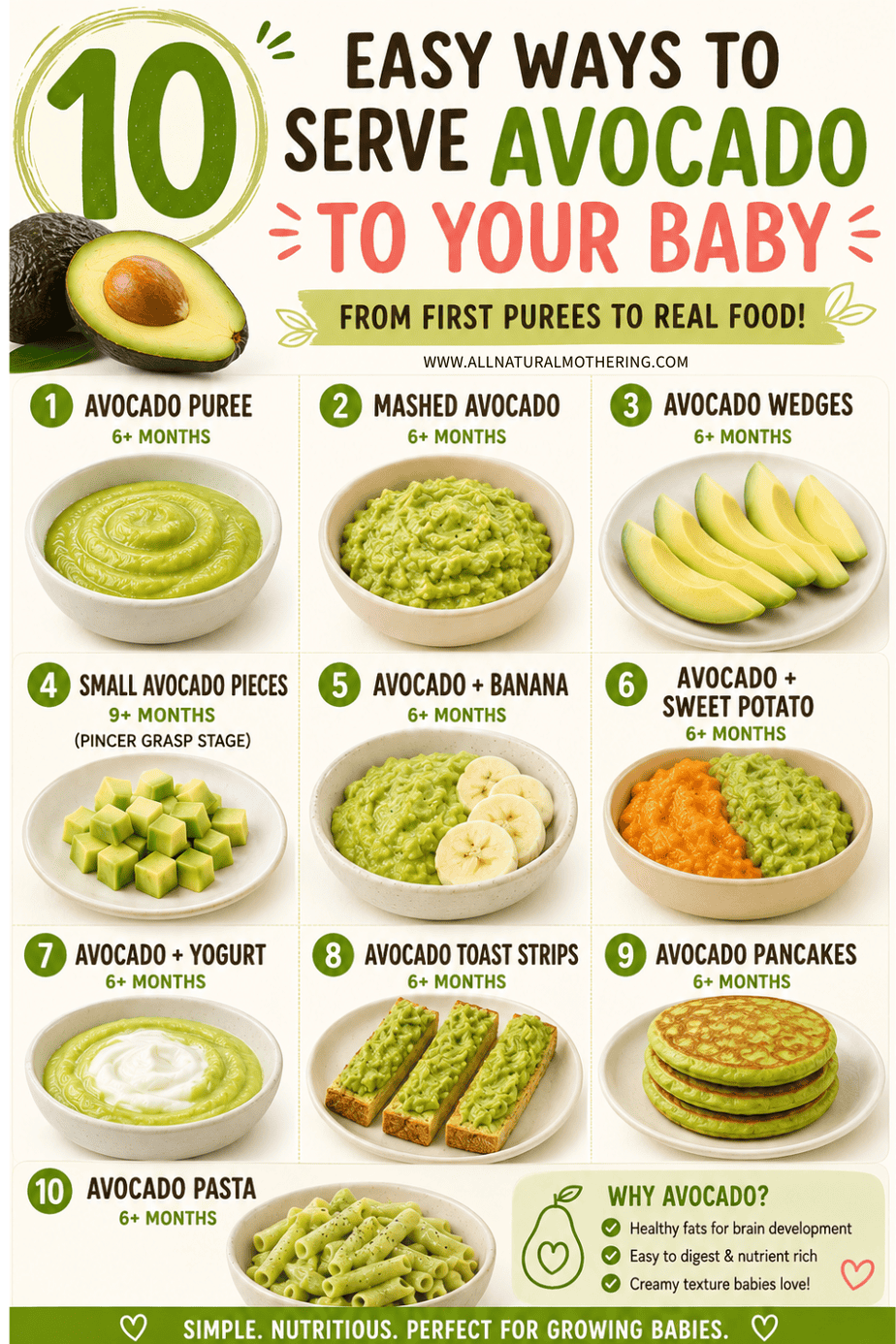
In this guide, I’m sharing 10 easy ways to serve avocado to babies, from first purees to finger foods, pancakes, toast and pasta.
Important: Most babies are ready to begin complementary foods at around 6 months, but readiness is more important than reaching a particular birthday. Your baby should show the developmental signs of readiness for solids. Always supervise your baby while eating and prepare foods in a developmentally appropriate size and texture.
Yes! Avocado can be a wonderful food to include when your baby starts solids.
Its naturally creamy texture makes it particularly convenient for beginning eaters. A ripe avocado can easily be blended, mashed or cut into soft pieces depending on your baby’s feeding skills.
Avocado also provides nutrients including unsaturated fats, fiber, folate, potassium, vitamin E and other vitamins and minerals.
Babies need dietary fat as part of a varied diet to support normal growth and development, making avocado an easy food to incorporate into meals.
Another reason I love avocado for babies is how easily it pairs with other foods.
Banana? Delicious.
Sweet potato? Absolutely.
Yogurt? So creamy.
Toast? One of the easiest finger foods.
Here are some of my favorite ways to serve it.
10 Ways to Serve Avocado to Baby
1. Avocado Puree — 6+ Months
If you’re starting with purees, a simple avocado baby puree is probably the easiest place to begin.
You need:
½ ripe avocado
Breast milk, prepared formula or water as needed
How to make avocado puree
Scoop the avocado flesh into a blender or small food processor.
Blend until smooth, adding a small amount of liquid at a time until you reach the consistency you want.
You can also mash an extremely ripe avocado thoroughly with a fork.
For babies just beginning with spoon-fed foods, you may want a thinner consistency. As your baby becomes more comfortable with texture, gradually make the puree thicker rather than keeping every food completely smooth.
Tip: You don’t have to make a huge batch. Avocado is so quick to prepare that I usually prefer making a small amount fresh.
2. Mashed Avocado — 6+ Months
Once your baby is comfortable with thicker textures, simply mash ripe avocado with a fork.
You don’t need to get every little lump out.
In fact, gradually introducing different textures can help babies learn how to manage food in their mouths.
Mash the avocado until it is soft and easy to scoop.
You can preload a baby spoon and allow your baby to bring the spoon to their mouth, or spoon-feed depending on the feeding approach you’re using.
3. Avocado Wedges — 6+ Months
Avocado can also work beautifully as a first finger food.
Choose an avocado that is ripe enough to easily mash between your fingers.
Remove the skin and pit completely, then cut the avocado into large, soft wedges that are easier for a beginning eater to grasp with their whole hand.
Avocado can be very slippery, so don’t be surprised if your baby spends the first few meals squeezing and dropping it!
That exploration is part of learning to eat.
Always make sure the avocado is appropriately soft before offering it.
4. Small Avocado Pieces — Around 9+ Months / Pincer-Grasp Stage
As babies develop their pincer grasp—the ability to pick up small objects between the thumb and index finger—you can begin offering appropriately sized soft pieces of avocado.
For many babies this develops around 9 months, although development varies.
Cut ripe, peeled avocado into small soft pieces and place a few on baby’s tray.
This gives your baby an opportunity to practice picking up food independently.
The avocado should still be very soft.
Rather than relying solely on age, watch your baby’s feeding and fine-motor skills when deciding how to serve foods.
Avocado Combinations for Baby
Once your baby has tried avocado, there are so many simple combinations you can make.
5. Avocado + Banana — 6+ Months
This may be one of the easiest homemade baby foods you’ll ever make.
Ingredients:
½ ripe avocado
½ ripe banana
Mash them together with a fork until you reach the texture appropriate for your baby.
Both ingredients are naturally creamy, so you usually don’t need to add any liquid.
The banana adds sweetness while the avocado makes the mixture wonderfully creamy.
This combination also works well as a spread on toast for older babies who are comfortable with finger foods.
6. Avocado + Sweet Potato — 6+ Months
Avocado and sweet potato make another delicious combination.
Ingredients:
¼–½ ripe avocado
¼ cup cooked sweet potato
Steam, bake or boil the sweet potato until it is completely soft.
Allow it to cool and mash it together with the avocado.
Add a little water, breast milk or prepared formula if you need to thin the mixture.
This is also a great way to gradually make baby’s purees thicker and introduce more texture.
7. Avocado + Yogurt — 6+ Months
Plain yogurt and avocado make an incredibly creamy combination.
You can serve it from a spoon or preload a spoon and let your baby practice self-feeding.
Choose plain, pasteurized yogurt without added sugar.
Remember that cow’s milk is a common allergen. Current guidance generally encourages introducing common allergens when babies are developmentally ready for solids rather than intentionally delaying them, unless your child’s healthcare provider has advised otherwise.
Avocado Finger Foods for Baby
As your baby’s eating skills progress, avocado can become an ingredient in all kinds of family foods.
8. Avocado Toast Strips — 6+ Months
Avocado toast isn’t just for adults!
Toast a piece of bread until it is firm enough to hold together but not excessively hard.
Mash ripe avocado over the toast and cut it into strips appropriate for your baby’s developmental stage.
For younger babies who are beginning self-feeding, larger strips can be easier to grasp than tiny pieces.
Avoid adding honey for babies younger than 12 months, and be mindful of added salt.
This is one of my favorite ways to turn avocado into a quick breakfast or lunch.
9. Avocado Pancakes — 6+ Months
If you make baby pancakes, try adding avocado to the batter.
Its creamy texture works beautifully in pancakes and is an easy way to add another food to baby’s breakfast.
A simple version can be made with ingredients such as:
Ripe avocado
Banana
Egg
Oats
Blend the ingredients, cook small pancakes thoroughly and allow them to cool before serving.
Cut or prepare the pancakes in a way that matches your baby’s eating skills.
If you’re introducing egg for the first time, treat it as a common allergen and introduce it appropriately.
10. Avocado Pasta — 6+ Months
Avocado makes an incredibly simple creamy pasta sauce without needing heavy cream.
Mash or blend ripe avocado until creamy and toss it with very soft, appropriately prepared pasta.
You can also blend avocado with ingredients your baby has already tried, such as:
Cooked peas
Plain yogurt
Soft cooked broccoli
A little lemon juice
Cooked spinach
For babies, keep the sauce simple and avoid heavily salting their portion.
Make sure the pasta shape and texture are appropriate for your baby’s current feeding skills.
How to Choose an Avocado for Baby
The avocado should be ripe and very soft when serving it to a baby.
Gently press the avocado with your fingers. It should give slightly under pressure without feeling completely mushy.
Once opened, the flesh should be creamy and free from large brown or spoiled areas.
For finger foods, do a quick texture check yourself.
If the avocado is firm and difficult to mash between your fingers, it isn’t the avocado I’d choose for baby’s meal.
How to Keep Avocado From Turning Brown
Cut avocado starts turning brown when exposed to oxygen.
The browning itself doesn’t necessarily mean the avocado has spoiled, but freshly prepared avocado is usually more appealing.
You can add a tiny squeeze of lemon or lime juice to help slow browning once your baby has been introduced to it.
For young babies, however, I find the easiest solution is simply to prepare a small amount of avocado at a time.
It takes less than a minute.
Can You Freeze Avocado Puree?
Yes, avocado puree can be frozen, although its texture and appearance may change somewhat after thawing.
Spoon the puree into a freezer-safe baby food tray and freeze.
Once frozen, transfer the portions to a labeled freezer-safe container.
Thaw the amount you need safely before serving and stir it well.
Don’t save food that has been contaminated with saliva from baby’s spoon or mouth.
Purees or Baby-Led Weaning: Which Should You Choose?
It doesn’t have to be one or the other.
Some families love traditional spoon-fed purees. Others follow baby-led weaning and offer appropriately prepared family foods from the beginning.
And many families—including mine—find that a combination approach works well.
The goal isn’t to fit into a particular feeding label.
It’s to give your baby opportunities to experience different tastes and textures while learning the skills needed to eat safely and independently.
Avocado makes that especially easy because you can change its preparation as your baby’s skills develop:
Smooth puree → thicker mash → soft wedges → small pieces → family foods.
Avocado for Baby FAQ
When can babies eat avocado?
Avocado can generally be introduced once a baby is developmentally ready to begin complementary foods, which is typically around 6 months.
Does avocado need to be cooked for babies?
No. A ripe avocado can be served without cooking. Make sure it is soft and prepared appropriately for your baby’s feeding abilities.
Can a 6-month-old eat avocado?
If your baby is developmentally ready for solids, avocado can be one of the foods you introduce around 6 months. It can be served as a puree, mash or appropriately prepared soft finger food.
Can babies eat avocado every day?
Avocado can be part of a baby’s varied diet, but there’s no need to serve the same food every day. Offering a variety of foods helps expose babies to different flavors, textures and nutrients.
Is avocado a common allergen?
Avocado is not considered one of the major common food allergens, although an allergic reaction to any food is possible. Introduce new foods thoughtfully and seek medical attention for symptoms of a serious allergic reaction.
More First Foods to Try
Once your baby has tried avocado, you can use the same idea with lots of other nutritious first foods.
I’ll be sharing more baby puree recipes, combination purees and finger-food ideas for each of these foods.
Save This: 10 Ways to Serve Avocado to Baby
Avocado is one of those foods that can grow right along with your baby.
Start with a creamy avocado puree or mash, move on to soft avocado wedges and small pieces as your baby’s skills develop, and eventually use avocado in foods the whole family can enjoy—like toast, pancakes and pasta.
You don’t need complicated recipes to give your baby nutritious and interesting first foods.
AllNaturalMothering.com is a participant in the Amazon Services LLC Associates Program, an affiliate advertising program designed to provide a means for us to earn fees by linking to Amazon.com and affiliated sites.
Disclaimer
All material provided on this website is for your information only and should not be construed as medical advice or instruction. Please consult with a medical professional regarding any matters related to the health and well-being of yourself or others. The information and opinions expressed here are believed to be accurate based on my best judgement. Readers who fail to consult with a medical professional assume the risk of any injuries.